October 11, 2026
Cold brew tea has a bad first impression problem. Someone drops a teabag into a glass of tap water, forgets it overnight, and wakes up to something that tastes like wet hay. They decide cold brewing isn't for them. In reality, cold water just needs a plan: enough leaf, enough time, and the right tea. Get those three roughly right and you end up with a glass that's sweet, clear and floral where a hot brew would be sharp and tannic.
What Cold Water Actually Extracts
Temperature changes what a leaf gives up. Hot water is fast and greedy: it pulls out aroma, colour, caffeine and tannins all at once, which is why a green tea left too long in hot water turns bitter and hollow. Cold water works slowly, and it favours the compounds you want in a chilled drink — amino acids, sugars and the lighter aromatics — while leaving much of the bitterness behind.
The trade-off is body. Cold brew tastes rounder and softer than a hot brew that's been chilled, but it has less grip. If you drink a tea specifically for its brisk, tannic edge, cold brewing will smooth that edge into something milder. That's either the point or the problem, depending on what you're after.
The Ratios to Start With
Ratios for cold brew are forgiving, but only if you start in the right range. A reliable default is 1 gram of leaf per 100 ml of water — roughly one heaped teaspoon of most loose leaves per 8 oz (240 ml) glass. By the litre, that's 10 to 12 grams of tea.
- Everyday drinking: 1 g per 100 ml. Light, clean, easy to drink straight.
- Stronger cup: 1.5 g per 100 ml. Better for black tea and for anyone who adds milk.
- Concentrate: 20–25 g per litre. Pour over ice and let the ice dilute it, or top with water or sparkling water.
- Broken leaf and fannings: use about 20 percent less. They release flavour faster than whole leaf, so it's easy to overshoot.
A kitchen scale gives repeatable results, but a teaspoon and a few notes does the job. Write down what you used so the next batch is easier to tune.
Timing: The Part Most People Rush
In the fridge, most teas need 6 to 12 hours. Some delicate greens are ready in 3 or 4. As a rough guide:
- Green tea: 3–5 hours. Longer pulls out grass and a dry bitterness.
- White tea: 4–6 hours. Silver needle and white peony are lovely cold.
- Light oolong: 6–8 hours.
- Roasted oolong: 8–10 hours.
- Black tea: 8–12 hours.
- Herbal, rooibos and pu-erh: 10–12 hours, or overnight.
Time is not a substitute for leaf. A weak batch left for two days doesn't get stronger — it gets bitter and flat. At room temperature things move faster: plan on 2 to 4 hours, then strain and refrigerate.
The Best Teas for Cold Brewing
Cold brewing flatters some teas and flattens others. The ones that shine tend to be fragrant, naturally sweet, or already low in bitterness.
Green tea
Sencha, dragon well and gyokuro cold brew into something quite different from their hot versions: sweet, marine, almost juicy, with none of the sharpness. Use slightly less leaf than usual and keep it under 5 hours.
White tea
White tea may be the best candidate on this list. A silver needle or white peony steeped cold for 5 or 6 hours gives a pale, honeyed, cucumber-ish glass that's hard to get any other way.
Oolong
Light, floral oolongs — high-mountain Taiwanese styles especially — cold brew beautifully. Roasted oolongs need longer and give a warmer, nuttier result.
Black tea
Black tea cold brews into a smooth, malty drink with almost none of the astringency. It's the best base for milk and sugar if you want a homemade iced tea. Skip dust-grade teabags where you can; whole leaf or large broken leaf gives a cleaner result.
Herbal tea and pu-erh
Peppermint, chamomile, hibiscus and rooibos all cold brew well at 10 to 12 hours. So does ripe pu-erh, which turns dark, earthy and surprisingly smooth. If you're pregnant, nursing or taking medication, check with a pharmacist or doctor before drinking large amounts of any herbal infusion.
Two Methods: Refrigerator and Counter
The fridge method is the one to start with. It's slow, it's forgiving, and you can set it going before bed.
- Measure your leaf into a clean jar or pitcher.
- Add cold, filtered water. Filtering matters if your tap water tastes of chlorine.
- Cover and refrigerate.
- Check at the low end of your time range, and again an hour later. Taste is the only reliable timer.
- Strain through a fine mesh sieve, or lift out the leaves. Press gently; squeeze hard and you'll add bitterness.
- Store the strained tea in a sealed bottle in the fridge.
The counter method is faster and brighter: 2 to 4 hours at room temperature, then strain and chill. It suits black tea and robust herbals better than delicate greens, and because the liquid sits warm for a few hours, get it into the fridge as soon as it's ready.
When a Batch Isn't Right
Bitter or drying: too much leaf, too long a steep, or both. Next time cut the leaf by a quarter and check an hour earlier. Broken tea and dust are the usual culprits.
Tastes like nothing: not enough leaf, or old tea. Another day in the fridge won't fix it. Add more leaf at the start instead.
Cloudy: usually harmless. Some greens and high-grown oolongs drop a haze when chilled, and it doesn't affect the taste.
Grassy or vegetal: the classic sign of a green tea steeped too long. Pull it at 3 hours and taste again.
Serving and Storing
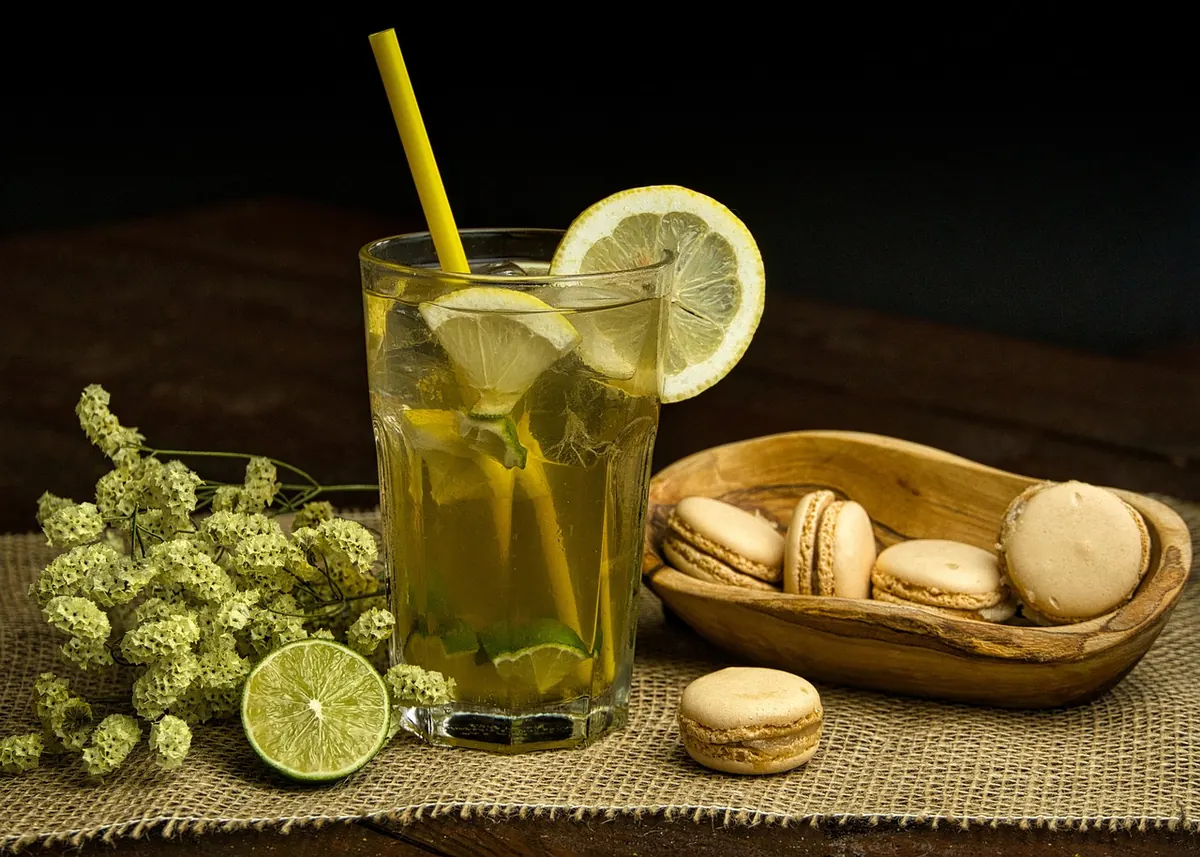
Serve cold brew straight from the fridge, over a little ice or neat if the tea is delicate. A squeeze of lemon sharpens black tea; a sprig of mint works on almost anything. For a sweeter drink, stir in a little honey syrup while the tea is still cold — it dissolves more evenly than straight honey.
Keep the strained brew in a sealed container for three or four days, and taste before you pour if it's been sitting a while. Discard anything that smells sour or looks fizzy. Unstrained leaves left in the water keep extracting, so strain as soon as the flavour is where you want it.
After two or three batches, the numbers become instinct. Start at a gram per 100 ml, taste early, and note what you did. The batch you liked best is the recipe worth keeping.
Photo: Anrita1705 / Pixabay